3 Security Gaps That Show Up in Every Multifamily Portfolio Review
 Jay Hobdy
Whether you’re benchmarking your current portfolio, preparing for a refinance, or evaluating an acquisition, the same three security deficiencies surface repeatedly — and all three are preventable.
What security deficiencies are most commonly found in multifamily due diligence and portfolio reviews? After years of working with owners and asset managers across the Atlanta market, the answer is consistent: outdated camera infrastructure, security system access gaps that surface when a manager transitions out, and deferred vehicle gate maintenance. None of them are complicated to fix. All of them create financial exposure that shows up at the worst possible times — during a transaction, at an insurance renewal, or in the middle of an incident. Here is what each one looks like and how to address it before it becomes a problem.
1. Outdated Camera Infrastructure: The Documentation Gap Nobody Notices Until It’s Too Late
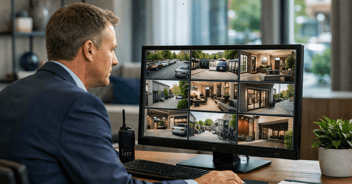
Camera systems are one of the most visible security assets on a multifamily property — and one of the most frequently overlooked during routine portfolio reviews. The issue is rarely whether cameras exist. It is whether they work, whether they produce usable footage, and whether that footage is actually retained when it is needed.
Analog cameras installed five to ten years ago were adequate for their time. They are not adequate for today’s insurance and liability environment. Low-resolution footage that cannot clearly identify a person, a vehicle, or the sequence of events in an incident is not useful documentation. In liability claims, unusable footage is often treated the same as no footage — and in some cases, evidence that a camera existed but produced no usable footage creates additional exposure rather than reducing it.
What a camera infrastructure audit should cover:
- Resolution and image quality — can the footage clearly identify faces, license plates, and incident details? If not, the system is not performing its primary liability function.
- Coverage — are there blind spots at entry points, parking areas, common areas, and amenity spaces where incidents are most likely to occur?
- Storage redundancy — is footage stored only on a local hard drive, or is there cloud backup or offsite redundancy? A single drive failure eliminates the entire recorded history. Systems without redundancy have a single point of failure that can surface at the worst possible moment.
- Retention period — most multifamily properties should retain footage for 30–45 days minimum. Systems that overwrite too quickly may not have footage available when a claim is filed weeks after an incident.
- Active recording — cameras that appear functional but have stopped recording are a common finding. The only way to confirm a camera is recording is to verify it in the management software, not by looking at the hardware.
- Who currently has access to the camera management software — and can they log in right now from their phone or laptop if an incident occurs after hours?
- Who is listed on the alarm monitoring account as the primary and backup contacts — and are those people still with the company, with current phone numbers?
- What is the verbal cancellation password on the monitoring account — and does the current on-call manager know it? Without it, a false alarm cannot be cancelled and a fire department dispatch cannot be stopped.
- Who has access to the access control platform — and has the previous manager’s credential been deactivated?
- Is the correct property address listed on the fire alarm monitoring account for dispatch? An incorrect address is a life-safety issue, not just an administrative one.
- Does the intercom management app have a current active user — and has the outgoing manager’s app access been revoked?
- Quarterly preventive maintenance visits covering mechanical components — motors, rollers, tracks, hardware, and safety edges — catch wear before it causes a failure.
- Annual loop testing with a megohmmeter to assess insulation resistance. This is the only reliable method for identifying loop degradation before a gate strike occurs.
- Documentation of each maintenance visit, including what was inspected, what was found, and what was corrected. That paper trail has direct value in liability claims and due diligence reviews.
- A clear escalation path for gate issues — on-site teams should know who to call and what the response time expectation is for a gate that is malfunctioning or stuck open.
- Fire Alarm Monitoring
- Security Cameras & Video Surveillance
- Access Control Systems & Vehicle Gates
- Burglar Alarm Systems & Monitoring
- Full Life Safety Inspections — fire sprinklers, extinguishers, emergency lighting, hydrants, backflow preventers & BDA/ERCES
When it surfaces in transactions: Buyers and their lenders are increasingly asking about camera infrastructure during due diligence. A property with aging analog cameras, no offsite storage, and gaps in coverage is a negotiating point. Modern IP camera systems can typically be phased in at a per-building pace to fit capital planning cycles — which makes proactive upgrades easier to budget than reactive replacements under transaction pressure.
2. Security System Access Gaps: The Right Systems Mean Nothing If the Right People Can’t Get In
One of the most consistent gaps we see across multifamily portfolios has nothing to do with the equipment itself — it has to do with who has access to it. Camera systems, alarm monitoring accounts, access control platforms, and intercom management software all require active user credentials. When a property manager leaves, those credentials rarely get updated promptly. The result is that the incoming manager — or the regional manager covering in the interim — cannot access the systems they are responsible for at exactly the moment they need them most.
We hear a version of the same call regularly: a manager transition has just happened, an incident has occurred, and the person on the phone needs immediate access to camera footage or needs to cancel an alarm dispatch — and nobody has the login, the account number, or the verbal password. That is a preventable situation, and it reflects a gap that shows up in portfolio reviews as clearly as aging equipment does.
What every property should be able to answer at any time:
A practical fix: The right fix is not a shared password document — sharing credentials across multiple people eliminates the audit trail that makes your security systems valuable in the first place. The right fix is making Gotcha Security part of your onboarding and offboarding process. When a manager joins or leaves, a quick call to us gets the right people set up with their own credentials and the outgoing manager removed promptly. Every access event stays tied to the right individual, your systems stay current, and you are never relying on a shared login that undermines your own documentation.
When it surfaces in portfolio reviews: Properties where security system access is undocumented or tied to a former employee’s credentials are a consistent finding in portfolio reviews. It signals a broader gap in operational discipline that buyers, lenders, and insurers all notice. Properties with documented, current, and tested system access demonstrate operational maturity that supports asset value.
3. Deferred Vehicle Gate Maintenance: The Liability Item That Hides in Plain Sight
Vehicle gates are among the most liability-intensive security assets on a multifamily property. A gate that strikes a vehicle — whether due to a sensor failure, a mechanical issue, or a timing problem — generates a claim. Those claims are a consistent source of insurance losses at multifamily properties, and they are almost always the result of deferred maintenance rather than random failure.
The most common cause of gate malfunction is vehicle detection loop failure. Detection loops are wire sensors embedded in the pavement that tell the gate when a vehicle is present — they are what prevent the gate from closing on a car that is still in the opening. Over time, pavement movement, temperature cycling, and general wear degrade the wire insulation. The result is a loop that gives intermittent or incorrect signals. Critically, loop degradation is not visually detectable. A loop can look completely intact while already failing. The only reliable way to identify loop degradation before it causes a gate strike is a mechanical inspection using a megohmmeter to test insulation resistance.
What a vehicle gate maintenance program should include:
When it surfaces in transactions: Ask the current vendor when the last full gate mechanical inspection was performed. On properties with deferred maintenance, the answer is often surprising — and the maintenance records to support it are frequently nonexistent. Buyers who identify this gap during due diligence use it. Sellers who address it proactively remove a negotiating point before it comes up.
Get Ahead of It Before It Gets Ahead of You
The three gaps above — outdated camera infrastructure, security system access that isn’t maintained through manager transitions, and deferred gate maintenance — share a common characteristic: they are all easy to address proactively and expensive to address reactively. A portfolio review that identifies and corrects these issues before a transaction, insurance renewal, or incident puts owners in a fundamentally stronger position — operationally, financially, and in negotiations.
Gotcha Security works with asset managers and owners across the Atlanta multifamily market to assess, upgrade, and maintain security infrastructure. We perform camera infrastructure audits, quarterly gate maintenance programs, and system access reviews to make sure the right people have the right access at every property. If you’re not sure where your portfolio stands on any of these, we’re glad to help you find out.
We’ve also compiled a full Multifamily Security & Life Safety Inspection Checklist your property teams can use to stay current across every system in your portfolio.
Gotcha Security provides:
- Fire Alarm Monitoring
- Security Cameras & Video Surveillance
- Access Control Systems & Vehicle Gates
- Burglar Alarm Systems & Monitoring
- Full Life Safety Inspections — fire sprinklers, extinguishers, emergency lighting, hydrants, backflow preventers & BDA/ERCES
Frequently Asked Questions
What security deficiencies most commonly surface during multifamily due diligence?
The three most consistent findings are outdated camera infrastructure that cannot produce usable footage for liability claims, security system access that was never updated after a manager transition — leaving incoming staff unable to access cameras, alarms, or access control platforms — and deferred vehicle gate maintenance with no documentation of the last mechanical inspection. All three are addressable proactively and create negotiating leverage for buyers when found reactively.
Why is analog camera footage a problem in multifamily liability claims?
Low-resolution analog footage frequently cannot clearly identify faces, license plates, or the sequence of events in an incident. In insurance claims and legal proceedings, footage that exists but cannot be used as documentation may provide no more protection than no footage at all — and in some cases creates additional exposure. Modern IP camera systems produce the resolution and clarity needed to actually support a defense.
What security system access should every multifamily property manager have?
Every property manager should have their own active login credentials for the camera management software, access to the access control platform for issuing and deactivating credentials, the alarm monitoring account number and verbal cancellation password, and the direct phone number for the central monitoring station. These should be set up individually — not shared — so that every system access event has a clear audit trail. Gotcha Security can handle credential setup and removal as part of your onboarding and offboarding process.
What causes most vehicle gate failures at multifamily properties?
The most common cause of gate malfunction is vehicle detection loop failure — degradation of the wire sensors embedded in the pavement that prevent the gate from closing on a vehicle. Loop degradation is not visually detectable and can only be reliably identified through a mechanical inspection using a megohmmeter to test insulation resistance. Quarterly preventive maintenance programs catch most gate issues before they result in a vehicle strike or claim.
How do security system deficiencies affect multifamily valuations?
Buyers and lenders increasingly review security infrastructure during due diligence. Outdated cameras, lapsed monitoring contracts, and undocumented gate maintenance create negotiating leverage for buyers and friction with insurers at renewal. Owners who proactively address these gaps before a transaction remove common due diligence findings before they become deal points.
Want a portfolio security review before your next transaction or insurance renewal? Call us at 678-430-3116 or visit gotchasecurity.net.
Related reading:
How Security Technology Is Protecting NOI in Multifamily
Security Practices Gaining Traction Across Atlanta Multifamily
Download: Multifamily Security & Life Safety Inspection Checklist
Download: Gotcha Security Property System Record — a fillable document that captures every security and life safety system on a property, including platform names, inspection history, monitoring account details, and who has access. The kind of documentation that is easy to produce when you have it and conspicuously absent when you do not. Fill it out yourself or contact us and we will complete it for you.
Gotcha Security | Serving the Atlanta Multifamily Market